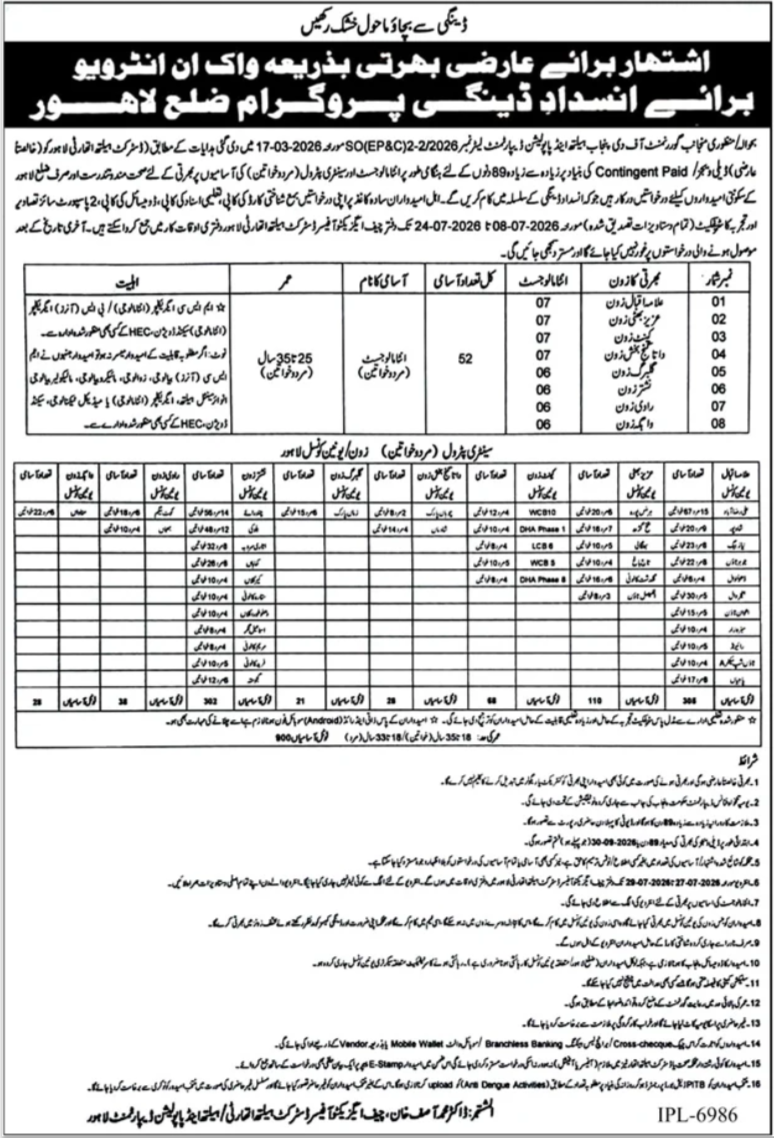
- Salary Offer 70000-80000 USD 70000-80000 Month
- Address Lahore, Punjab, Pakistan
- Age limit 20-30
- Gender Both
- Job Sector Governament
- Apply Through By Hand
- Job Authority
- Number of Post Multiples
- Education MBBS
- TA/DA No
- Domicile kpk,Balochistan,Sindh,Punjab
- Newspapper Jang Jobs
- Experience Required Fresh Can Apply
- Official Website https://e.jang.com.pk/lahore/09-07-2026/page2
| Posted On | |
|---|---|
| Company: | |
| Location: | |
| Job Type: | |
| Last Date: |
Jobs Positions
The Health & Population Department is one of the most important government departments in any country. It is responsible for improving the health of the people and ensuring access to quality healthcare services. The department also manages population welfare programs, maternal and child health services, disease prevention, and public health awareness. Its main objective is to provide affordable, accessible, and effective healthcare to all citizens while promoting healthy lifestyles and controlling population growth through education and family planning.
One of the primary responsibilities of the Health & Population Department is to provide medical services through hospitals, clinics, and basic health units. These healthcare facilities offer treatment for common illnesses, emergency care, surgeries, vaccinations, and maternal healthcare. The department ensures that qualified doctors, nurses, pharmacists, and other healthcare professionals are available to serve the public. It also works to improve healthcare infrastructure by building new hospitals and upgrading existing medical facilities.
Disease prevention and control are major functions of the department. It organizes vaccination campaigns to protect children and adults from infectious diseases such as polio, measles, hepatitis, and tuberculosis. The department also monitors outbreaks of diseases like dengue, malaria, and COVID-19 and takes immediate action to control their spread. Public awareness campaigns educate people about hygiene, sanitation, healthy eating, regular exercise, and preventive healthcare measures.
The Health & Population Department plays a vital role in maternal and child health. It provides prenatal and postnatal care to mothers, promotes safe childbirth, and ensures that newborn babies receive essential healthcare services. Immunization programs protect children from life-threatening diseases, while nutrition programs help reduce malnutrition among mothers and young children. These efforts contribute to lower maternal and infant mortality rates and improve overall family health.
Population welfare is another important responsibility of the department. Rapid population growth can create challenges such as pressure on healthcare, education, housing, employment, and natural resources. To address these issues, the department promotes family planning and reproductive health services. It provides counseling, educational programs, and access to family planning methods so that families can make informed decisions about the number and spacing of their children. These initiatives support healthier families and sustainable national development.
Health education is a key component of the department’s work. Through seminars, workshops, media campaigns, and community outreach programs, people are informed about disease prevention, nutrition, mental health, reproductive health, and healthy lifestyles. Schools, colleges, and community organizations often cooperate with the department to spread health awareness. Educating the public helps people make informed decisions that improve their quality of life.
The department also focuses on environmental health by monitoring water quality, sanitation, waste management, and food safety. Clean drinking water, proper sewage systems, and hygienic food preparation are essential for preventing diseases. Health inspectors regularly examine restaurants, food factories, and public places to ensure compliance with health regulations. These measures protect communities from foodborne illnesses and environmental hazards.
Another important function of the Health & Population Department is collecting and analyzing health data. Accurate information about diseases, births, deaths, and healthcare services helps the government plan effective policies and allocate resources where they are needed most. Modern technology and digital health systems have improved data collection, allowing faster responses to public health emergencies and better management of healthcare services.
Despite its achievements, the department faces several challenges. Limited financial resources, shortages of trained healthcare professionals, overcrowded hospitals, unequal access to healthcare in rural areas, and the rising burden of chronic diseases can affect service delivery. Climate change, pollution, and emerging infectious diseases also create new public health challenges. To overcome these problems, governments need to invest in healthcare infrastructure, medical education, technology, and preventive health programs.
In Pakistan, the Health & Population Department works with provincial governments, local authorities, and international organizations to improve healthcare services. It supports programs related to immunization, maternal and child health, nutrition, disease surveillance, and family planning. Public-private partnerships and community participation also strengthen the healthcare system by expanding access to medical services and promoting health awareness.
In conclusion, the Health & Population Department plays a crucial role in protecting public health and improving the well-being of society. Through healthcare services, disease prevention, maternal and child health programs, family planning, health education, and environmental health initiatives, the department contributes to a healthier and more productive population. Continued investment, effective planning, and public cooperation are essential to achieving better health outcomes and ensuring that quality healthcare is available to everyone.